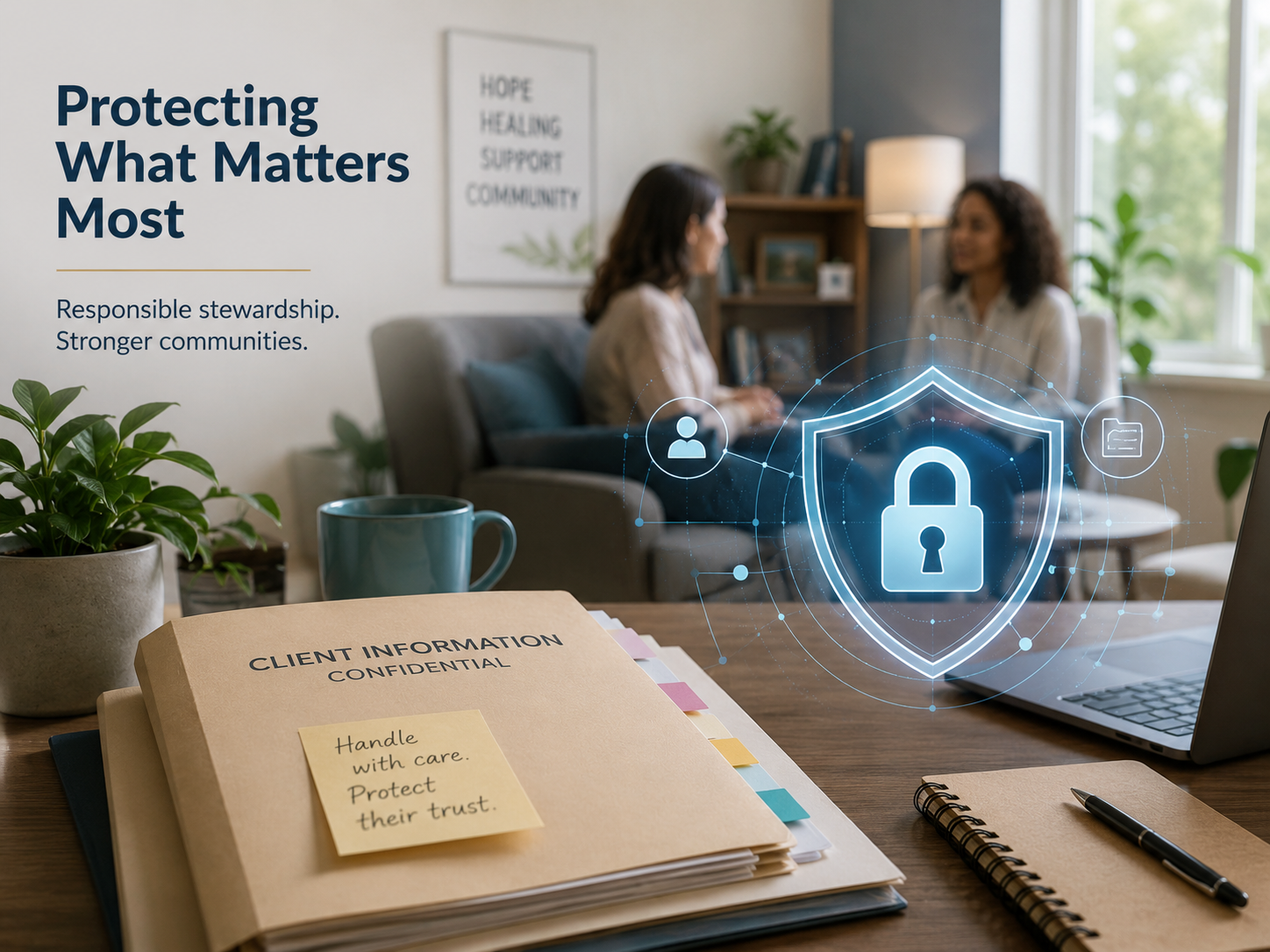
Many nonprofit organizations provide counseling, mental health services, family support, crisis intervention, and wellness programs that involve handling highly sensitive personal information. Yet many leaders assume that because they are a nonprofit organization, healthcare privacy and security regulations do not apply to them.
The reality is more nuanced.
Whether HIPAA applies to a nonprofit counseling organization depends on the services provided, how information is handled, and relationships with healthcare providers, insurers, and other entities. However, regardless of whether HIPAA technically applies, organizations that handle sensitive client information have a responsibility to protect it.
Does HIPAA Apply to Nonprofit Counseling Organizations?
The answer is: it depends.
HIPAA generally applies to covered entities and business associates that handle protected health information (PHI). Some nonprofit counseling organizations may fall within these definitions, while others may not.
Factors that may affect HIPAA applicability include:
- Whether licensed healthcare professionals are providing services
- Whether health information is collected, stored, or transmitted electronically
- Whether the organization bills insurance providers
- Whether the organization provides services on behalf of a healthcare organization
- Whether third-party vendors process protected health information
Because every organization is different, nonprofit leaders should seek qualified legal or compliance guidance when determining whether HIPAA applies to their specific operations.
The Bigger Question: Are You Protecting Sensitive Information?
Many nonprofit leaders focus on whether HIPAA technically applies.
A better question is:
How well are we protecting the sensitive information entrusted to our organization?
Counseling organizations often maintain information such as:
- Client intake forms
- Counseling notes
- Assessments and evaluations
- Personal contact information
- Crisis intervention records
- Employee assistance program records
- Referral information
A breach involving this information can damage client trust, harm the organization’s reputation, and divert resources away from its mission.
Common Security Gaps in Nonprofit Organizations
Many nonprofits operate with limited technology budgets and small administrative teams. As a result, important security controls are often overlooked.
Common gaps include:
Inconsistent Multi-Factor Authentication (MFA)
Many organizations enable MFA for some users but not all users, leaving accounts vulnerable to compromise.
Lack of Endpoint Management
Organizations often do not maintain a complete inventory of laptops, desktops, and mobile devices accessing sensitive information.
Missing Device Encryption
Lost or stolen devices can expose confidential information if encryption is not enabled and verified.
Limited Security Monitoring
Without modern endpoint detection and response tools, organizations may not know when suspicious activity is occurring.
No Incident Response Plan
Many nonprofits have never documented how they would respond to a cybersecurity incident or data breach.
Insufficient Documentation
Policies, procedures, asset inventories, and security controls are frequently undocumented, making risk management difficult.
Building a Compliance-Ready Organization
Whether HIPAA applies or not, nonprofit counseling organizations should consider implementing foundational security controls such as:
- Multi-Factor Authentication (MFA)
- Endpoint protection and monitoring
- Device encryption
- Secure backups
- Security awareness training
- Access control reviews
- Incident response planning
- Technology documentation
- Vendor risk management
- Periodic security assessments
These controls not only support compliance efforts but also help protect clients, staff, donors, and the organization’s mission.
Protecting More Than Data
For nonprofit counseling organizations, cybersecurity is about more than technology.
It is about protecting vulnerable individuals, preserving community trust, and ensuring that donor investments continue to support meaningful services rather than recovering from preventable incidents.
Whether your organization is formally subject to HIPAA or simply wants to improve its security posture, building a structured approach to risk management is an important step toward protecting the people you serve.
How Kraken Technology Solutions Helps
Kraken Technology Solutions helps organizations improve cybersecurity, governance, and compliance readiness through risk assessments, security controls, documentation, and ongoing compliance support.
By focusing on practical risk reduction and operational maturity, organizations can build confidence that sensitive information is protected and that they are prepared for future compliance requirements.
Disclaimer: This article is provided for informational purposes only and does not constitute legal advice. Organizations should consult qualified legal counsel or compliance professionals regarding specific HIPAA applicability and regulatory obligations.