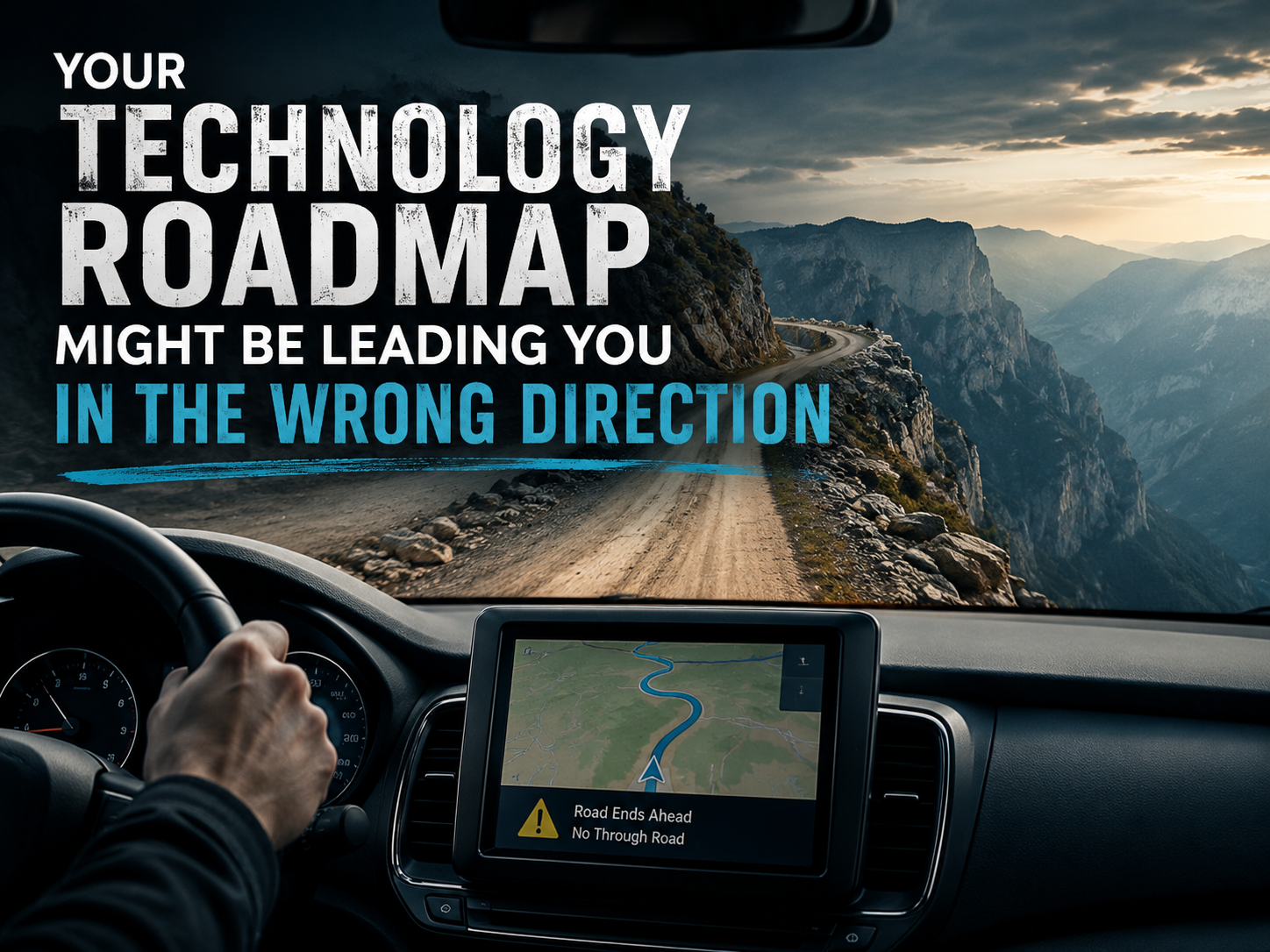
Every Managed Service Provider talks about building a technology roadmap.
But here’s the question I think more business leaders should be asking:
A roadmap to where?
Because a roadmap without a destination isn’t really a roadmap.
It’s just a list of projects.
Too often, technology roadmaps look something like this:
- Replace aging servers.
- Upgrade employee laptops.
- Refresh networking equipment.
- Implement Microsoft 365.
- Deploy MFA.
- Roll out Copilot.
- Upgrade the firewall.
None of those are bad recommendations.
In fact, many of them may be exactly what your organization needs.
The problem isn’t the technology.
The problem is that many roadmaps begin with technology instead of beginning with the business.
At Kraken Technology Solutions, we believe that’s backwards.
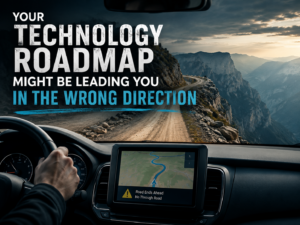
Imagine Trusting Your GPS Without Choosing a Destination
Think about the last time you used GPS.
You didn’t open the app and simply say:
“Drive.”
You entered a destination.
Only then did the GPS calculate the best route.
Now imagine if your GPS ignored where you wanted to go.
Instead, it simply found the newest road.
Or the fastest highway.
Or the route with the nicest scenery.
It might still be an excellent road.
It just wouldn’t take you where you actually needed to be.
Technology roadmaps work exactly the same way.
If your technology strategy isn’t aligned with your business objectives, you may end up implementing excellent technology that takes your organization in the wrong direction.
Technology Is a Vehicle—Not the Destination
One of the biggest misconceptions we see is that technology is the strategy.
It isn’t.
Technology is an enabler.
Its purpose is to help the business accomplish something.
That means every technology decision should answer a business question.
For example:
- Are we planning to grow from 30 employees to 150?
- Are we expanding into new markets?
- Are we preparing for an acquisition?
- Are we trying to improve profitability?
- Will we need to satisfy enterprise security requirements?
- Are we planning to introduce AI into our operations?
- Are we becoming more regulated?
Those answers determine where your roadmap should lead.
Not the other way around.
Businesses Evolve. Your Roadmap Should Too.
Organizations don’t stay the same forever.
Neither should their technology strategy.
An early-stage company may prioritize speed and flexibility.
A growing company may need standardized systems and better collaboration.
As the business matures, leadership often begins asking different questions.
Questions like:
- How do we reduce operational risk?
- How do we improve executive visibility?
- How do we protect customer trust?
- How do we prepare for audits?
- How do we govern AI responsibly?
- How do we build a company that’s easier to scale?
Notice how few of those questions are actually about technology.
They’re business questions.
Technology simply becomes one of the tools used to answer them.
A Technology Roadmap Should Develop Business Capabilities
This is where we think many organizations miss a tremendous opportunity.
Instead of asking:
“What technology should we buy next?”
Ask:
“What capabilities does our business need next?”
Maybe your organization needs:
- Better executive reporting.
- Stronger cybersecurity.
- Governance.
- Compliance.
- AI readiness.
- Automation.
- Business intelligence.
- Improved customer experience.
- Better operational visibility.
Once those capabilities are identified, technology becomes much easier to prioritize.
Instead of chasing products…
You’re building capabilities.
The Best Technology Decisions Are Business Decisions
We’ve seen organizations invest hundreds of thousands of dollars in technology that never truly solved the underlying business problem.
Why?
Because nobody stopped to ask what success actually looked like.
Buying better tools doesn’t automatically create a better business.
Using technology intentionally does.
That’s why the best technology conversations rarely begin with vendors.
They begin with leadership.
Technology, Cybersecurity, Governance, Compliance, and AI Are Connected
One of the reasons traditional technology roadmaps often fall short is because they treat every initiative independently.
Technology.
Cybersecurity.
Compliance.
Governance.
AI.
Different projects.
Different conversations.
Different budgets.
We don’t see them that way.
Each one supports the others.
Good governance improves cybersecurity.
Strong cybersecurity supports compliance.
Compliance builds customer trust.
AI depends on governed, high-quality information.
Technology enables all of it.
When those initiatives are planned together, they become a competitive advantage instead of a collection of unrelated projects.
The Roadmap Should Support the Mission
One of the core principles we operate by at Kraken Technology Solutions is simple:
Technology must support the mission.
That sounds obvious.
But it fundamentally changes how you think about planning.
Instead of asking:
“What’s next on the technology roadmap?”
We ask:
“What’s next for the business?”
The answer to that question determines everything else.
Why We Created the Kraken Strategic Technology Assessment (KSTA)
This philosophy is exactly why we developed the Kraken Strategic Technology Assessment (KSTA).
KSTA isn’t designed to tell you which firewall to buy.
Or which laptops need replacing.
Those conversations matter—but they’re only part of the picture.
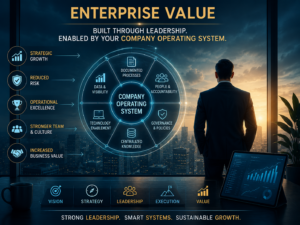
KSTA helps leadership teams understand how technology, cybersecurity, governance, compliance, and AI should evolve alongside the business.
During the assessment, we work with leadership to identify:
- Current business objectives.
- Future growth plans.
- Operational bottlenecks.
- Technology opportunities.
- Governance maturity.
- Cybersecurity priorities.
- Compliance considerations.
- AI readiness.
Only then do we begin building the roadmap.
Because once the destination is clear…
The technology decisions become much easier.
Final Thoughts
A roadmap isn’t valuable because it contains technology.
It’s valuable because it helps your organization arrive somewhere meaningful.
The best technology roadmaps don’t begin with hardware refreshes.
They begin with business strategy.
Technology.
Cybersecurity.
Governance.
Compliance.
AI.
These aren’t separate initiatives.
They’re business capabilities that work together to help organizations grow, adapt, and create long-term value.
If your technology roadmap isn’t helping your business reach its destination, it may be time to ask a different question.
Not…
“What technology should we implement next?”
But…
“Where is our business trying to go?”
Because once you know the destination, technology can finally do what it was always meant to do:
Support the mission.